Infrastructure foundation
- Data center & facilities
- Compute & storage
- Private WAN / MPLS / Ethernet
- Routing, segmentation & security
- Communications platforms
- Recording infrastructure
- PTP / NTP / GNSS timing
- Monitoring & operations

We design, integrate and support trading floor infrastructure—from colocation, carrier and market connectivity to trader voice, trading communications, communications recording and precision timing—so trading operations stay connected, available and ready to operate.

THE HUMAN OUTCOME
Behind every trading position is a chain of infrastructure, services and providers that must work together as one system.
Market data, market connectivity, trader voice, dealerboards, communications recording, applications and trusted time all converge at the workstation. When that chain works, the trader can focus on the market. When it does not, markets do not wait.

THE BIG PICTURE
A complete infrastructure chain, designed to work as a service for the trading operation.
COLOCATION & DEPLOYMENT REACH
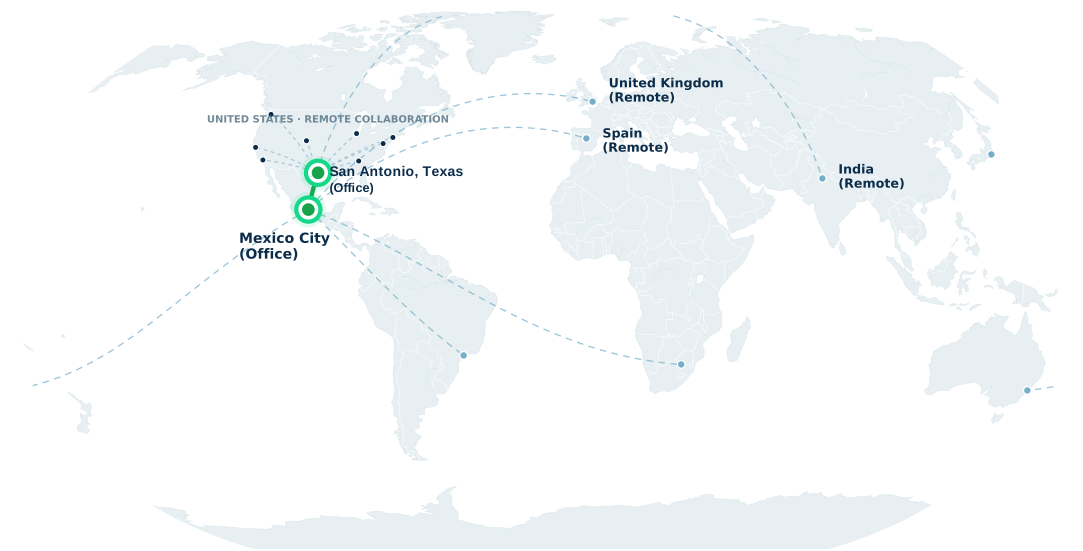
YPTG can coordinate and execute customer infrastructure deployments across Mexico, the United States and Madrid—from colocation and carrier interconnection through the client back room and trading floor.
San Antonio, Texas, USA · Mexico City, Mexico
Mexico City metro · Querétaro · Monterrey · Hermosillo · Mérida
San Antonio ↔ Mexico City
United States · United Kingdom · Madrid · other regions
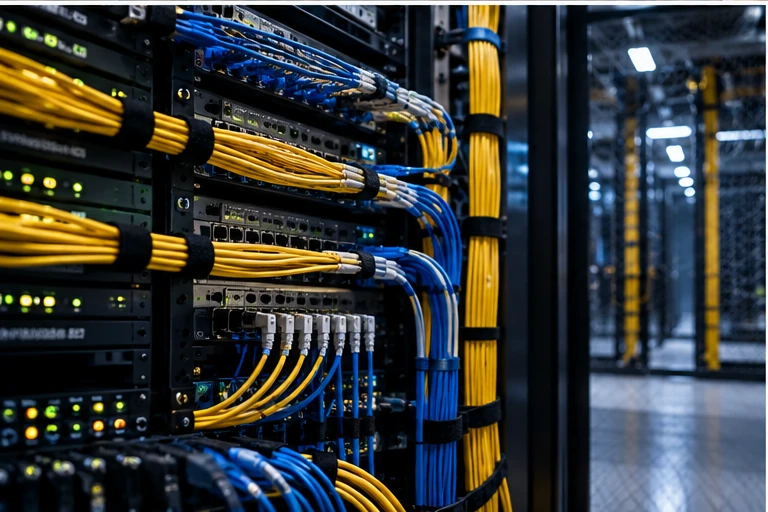
In a colocation model, the facility provides the physical environment and interconnection ecosystem. The customer places its infrastructure there, and YPTG can design, deploy, integrate and support that technology—from rack and cabling through network, security, timing, cross-connect coordination, carrier handoffs, testing, cutover and operational readiness.
Customer-selected facility, rack or cage, power and environment.
Rack & stack, cabling, network, security and timing infrastructure.
Carrier cage, demarcation, cross-connects and service handoff.
MPLS, SD-WAN, private WAN, diverse paths and secure routing.
Routing, firewalls, recording, timing distribution and monitoring.
Trader voice, turrets, dealerboards, recording, market data and trusted time.
REALITY IN THE FIELD
Every component can be operational, but the trading service can still be impacted by dependencies between systems, providers and teams.
A green status on the infrastructure does not guarantee a healthy trading service.The carrier reports the link is operational, but routing, latency, multicast, FIX or a handoff dependency is preventing the service from working.
The recorder is available, but a required voice, endpoint or communications stream is not being captured correctly.
The grandmaster is healthy, but downstream boundary clocks, network paths or endpoints are not receiving trusted time correctly.
Both paths are operational but may still share a carrier, device, facility, power source or upstream dependency.
THE FRONT ROOM
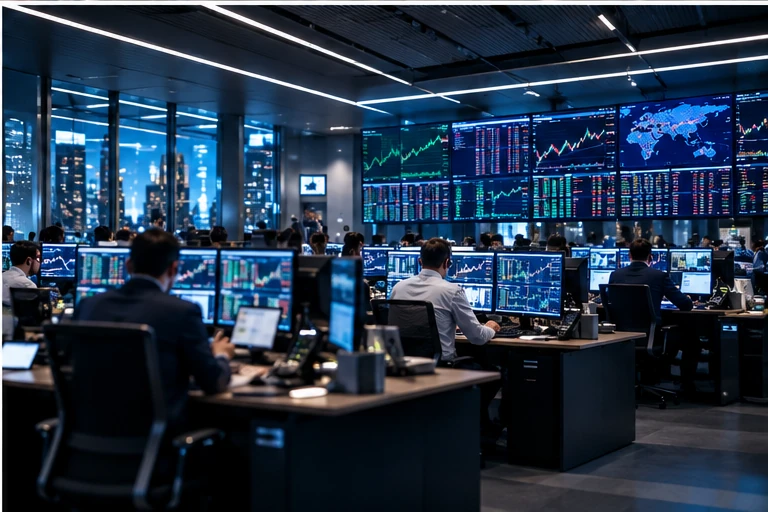
Market data, trading applications, trader voice, trading displays, communications recording, market connectivity and trusted time converge at the trading position.
Real-time prices, order books and market depth, analytics, news, OMS / EMS and execution applications.
Dedicated trading communications, hardware or soft turrets, SIP / SBC, private wire, intercom and persistent channels.
Voice and communications capture, recording assurance, retention, retrieval and trade-reconstruction support.

Financial extranets, private WAN, MPLS, Ethernet, FIX, UDP, multicast and low-latency market-access routes.
Multi-screen market-data displays, trader workspaces, terminals and application-ready workstation services.
PTP / IEEE 1588, NTP, GNSS, UTC traceability, grandmaster and boundary-clock distribution.
BEYOND IMPLEMENTATION
Deployment is only the beginning. Operational support keeps the trading environment observable, supportable and changeable while protecting service continuity across systems, carriers and providers.

FLEXIBLE ENGAGEMENT
Start with one dependency, a complete technical workstream or the full infrastructure path. YPTG can scale the engagement around the operating requirement without forcing a one-size-fits-all delivery model.
Examples include a carrier handoff, recording integration, timing rollout, firewall change or trading-communications dependency.
Bring together connectivity, network, security, communications, recording, timing or operational readiness as one coordinated workstream.
From customer-selected colocation and carrier handoffs through the back room, trading floor, go-live and ongoing operations.
TECHNOLOGIES & STANDARDS
We remain vendor-neutral in the public architecture and work from the technical requirements of the environment.
Representative technology platforms within our engineering experience.
Trader voice and communication infrastructure that can integrate across customer-selected turret and dealerboard ecosystems.
Carrier, venue and financial-network connectivity engineered around resilient paths and the protocols the trading service requires.
Communications capture and recording infrastructure designed for reliable retention, retrieval and operational assurance.
Trusted-time architecture from source through distribution, with attention to resilience, traceability and endpoint delivery.
Operational disciplines that connect infrastructure health with the service experienced by the trading operation.
Physical and field execution that connects facility, carrier and customer infrastructure into an operational service.
FAQ
Practical questions about integrating, deploying and operating trading-floor and financial-markets infrastructure.
Yes. An engagement can focus on one dependency—such as timing, connectivity, recording, trading communications, network/security, field engineering or monitoring—or span a complete workstream and the full infrastructure path from colocation through the trading floor and ongoing operations.
Yes. YPTG can coordinate technical delivery across customer-selected data centers, carriers, technology providers and client teams, including rack deployment, cross-connects, carrier handoffs, routing, cabling, testing, cutover and operational dependencies. Facility ownership, commercial colocation services and provider relationships remain with the respective provider and/or customer.
Yes. YPTG can engineer and integrate the surrounding communications and infrastructure dependencies, including SIP, SBC, VoIP, IP networking, private wire, intercom, hoot / persistent channels, recording integration, resilience, monitoring and deployment coordination across customer-selected trader-communications ecosystems.
Yes. Scope can include financial extranets, private WAN, MPLS, Ethernet, FIX connectivity, TCP/IP, UDP, multicast, carrier handoffs, cross-connects, routing, segmentation, diverse paths, failover and operational validation for market, venue or counterparty connectivity.
Yes. YPTG can support communications capture and recording infrastructure across voice and related communication channels, including recording integration, retention, retrieval, archive, recording assurance, service monitoring and trade-reconstruction dependencies. Regulatory interpretation and formal compliance approval remain with the client's appropriate legal, compliance and control functions.
Yes. Scope can include PTP / IEEE 1588, NTP, GNSS, UTC traceability, grandmaster and boundary-clock architecture, timing distribution, holdover considerations, resilience, endpoint delivery and end-to-end validation.
No. YPTG provides compliance-aware infrastructure engineering designed to support operational, evidentiary and control requirements. Regulatory interpretation, legal advice and compliance approval remain with the client's appropriate legal, compliance and control functions.
START THE CONVERSATION
From one technical dependency to a complete financial-markets infrastructure program, we can start with the operating outcome and work backward through the systems, providers and risks that support it.